Gro
skill
App Design
focus
Food and Beverage
Role
Product Designer
Year
2021

“Food waste refers to food that is fit for consumption but consciously discarded at the retail or consumption phases.” - Harvard School of Public Health
Overview
Food waste is a preventable yet widespread issue. Nearly 31% of consumer-level food ends up wasted, and 95% of that waste goes to landfills, releasing methane—a powerful greenhouse gas. Because food is the largest category in U.S. municipal waste, reducing household waste can significantly impact climate outcomes.
Gro was developed through a design studio at UC San Diego, where my team and I focused on the consumer level, where planning, behavior, and decision-making most directly influence waste. Motivated by a shared passion for sustainability, we set out to design a tool that empowers people to make intentional food choices that benefit both the planet and their wallets.
Initial research
Deepening our understanding of food waste
To build a strong foundational understanding, we began with secondary research and participated in online communities discussing food waste. Our goal was to identify where in the shopping and consumption cycle waste most commonly occurs.
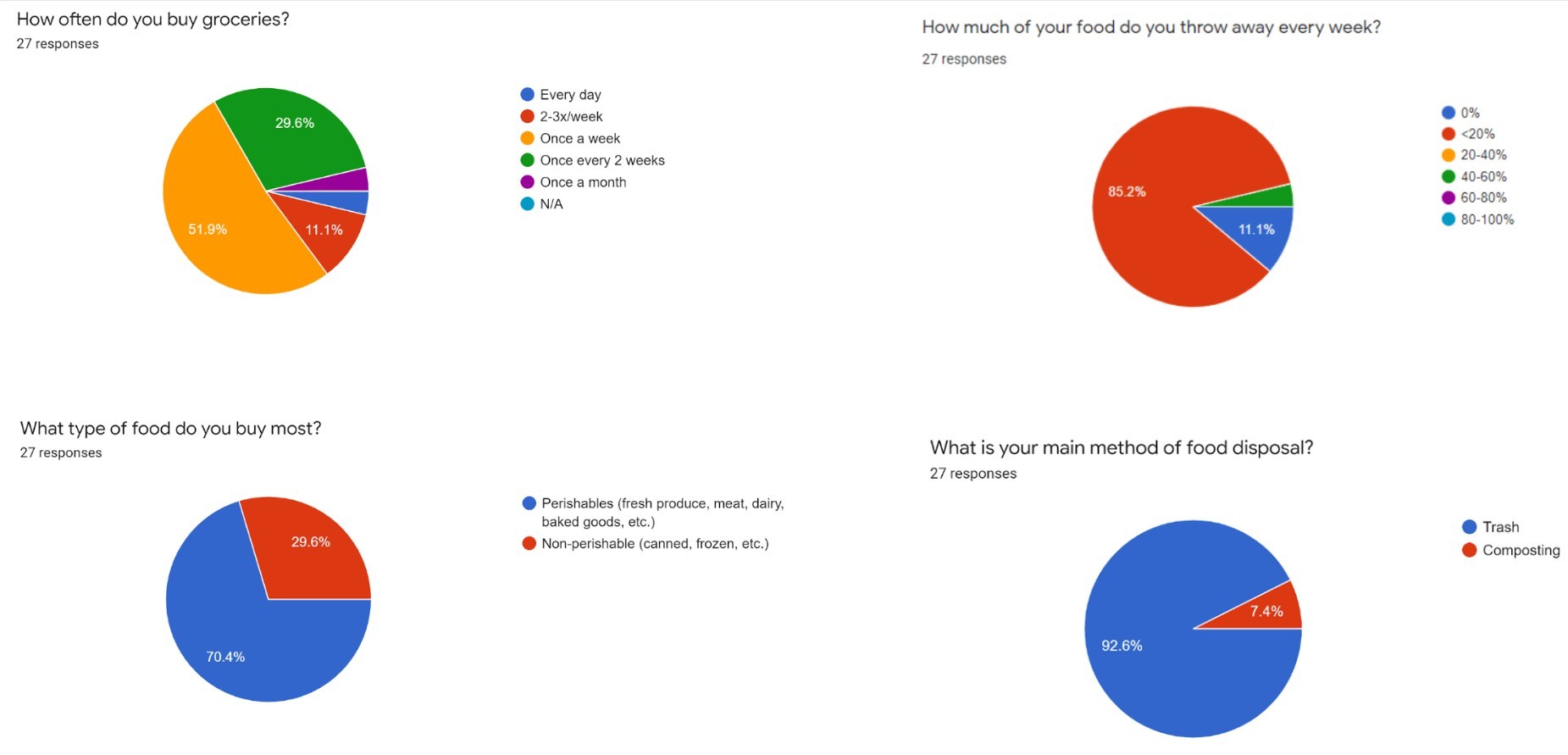
We followed this with primary research, including a questionnaire and semi-structured interviews, to better understand consumers’ environmental attitudes, shopping habits, and disposal behaviors.
Key research insights
Our data revealed two major insights:
Lack of planning leads to waste. Many people shop without lists, leading to overbuying, forgotten items in the fridge, and avoidable waste.
Behavior change must be easy and affordable. Users will not adopt a new system if it feels time-consuming, inconvenient, or costly, even if they care about the environment.
These findings helped us pinpoint where design intervention could have the greatest impact.
Personas
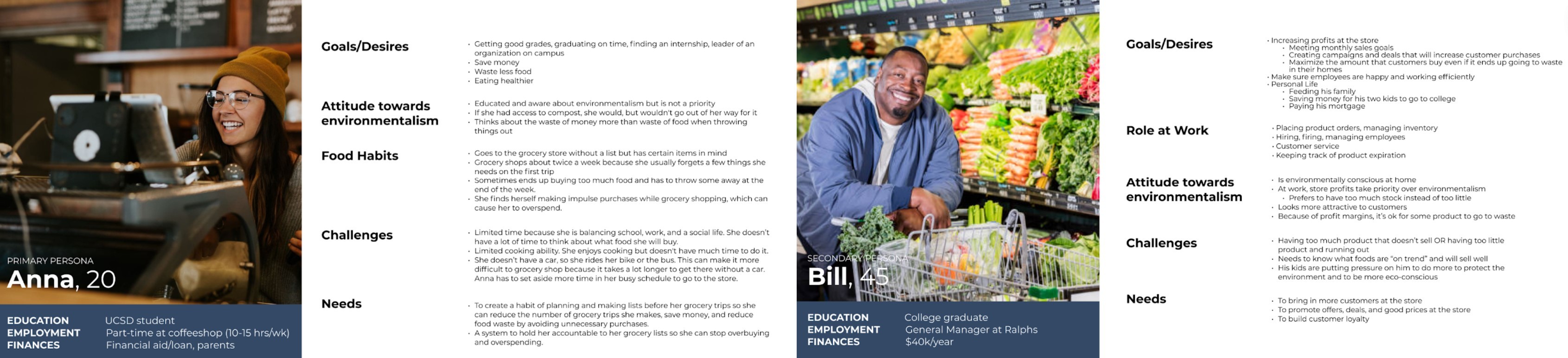
We created primary and secondary personas to capture the motivations, behaviors, and pain points of typical grocery shoppers. These guided our design decisions throughout the project.
The problem
How might we help consumers reduce household food waste by making grocery planning easier, more intentional, and more motivating without adding inconvenience or cost?
Through our research, we realized that food waste often begins before food is purchased: at the planning stage. Without structure, users tend to overbuy, forget what they already have, and let food expire. The core problem we set out to solve was how to equip users with effective, easy-to-use planning tools that fit naturally into their routines and lower the barriers to sustainable habits.
The solution
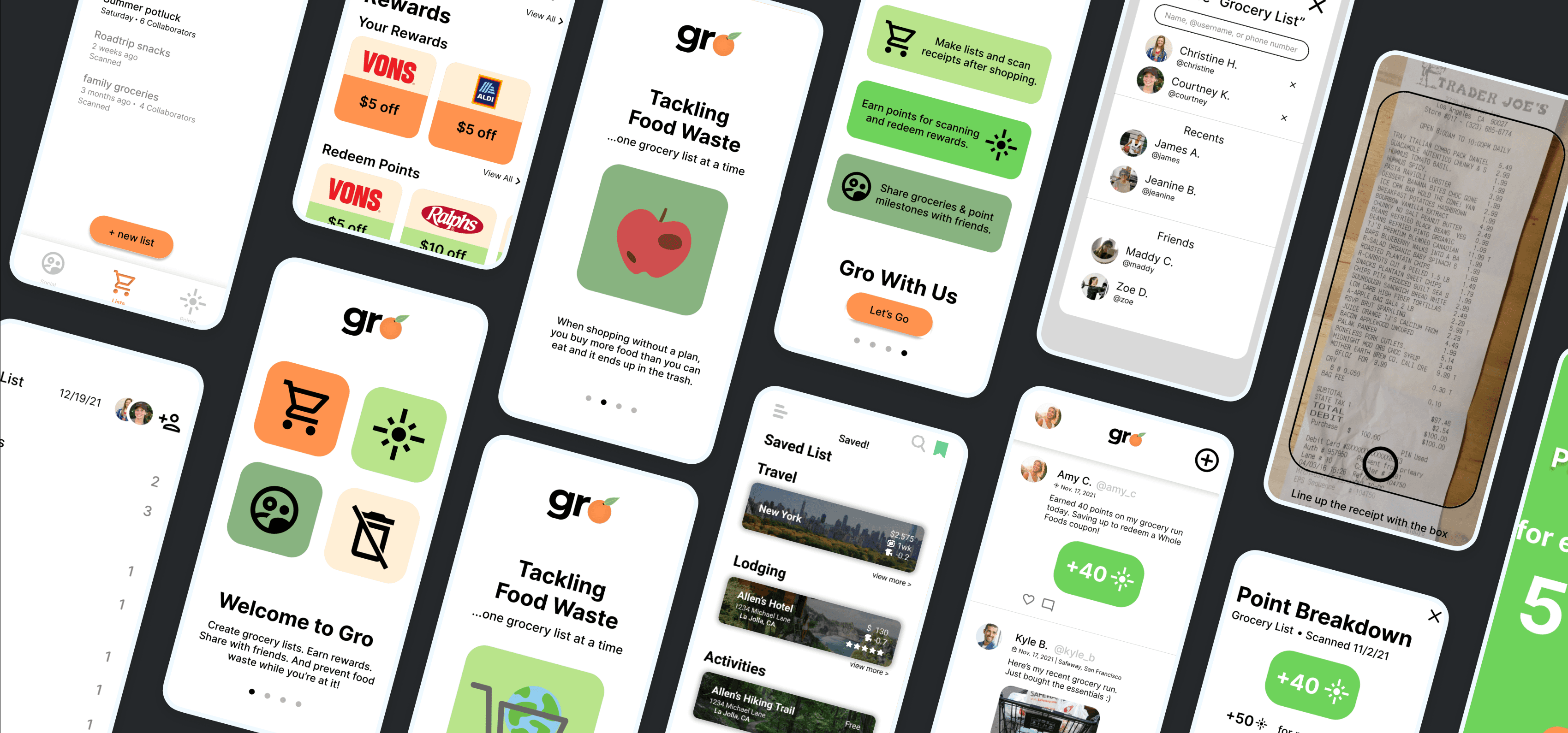
We designed Gro, an AI grocery-planning app that helps users reduce food waste by sticking to intentional shopping habits.
Gro compares users’ planned lists with their actual purchases and rewards consistency through coupons and deals. A built-in social feature adds accountability by letting users share grocery trips and see how friends shop.
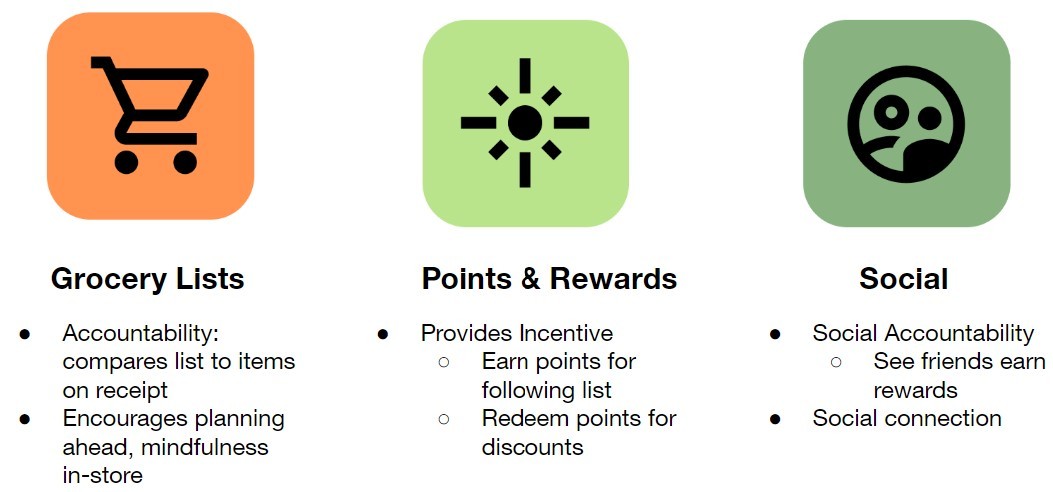
By making planning easier, shopping more efficient, and good habits more rewarding, Gro encourages users to buy only what they need, helping prevent food waste at the source.
Design Process
Competitive analysis
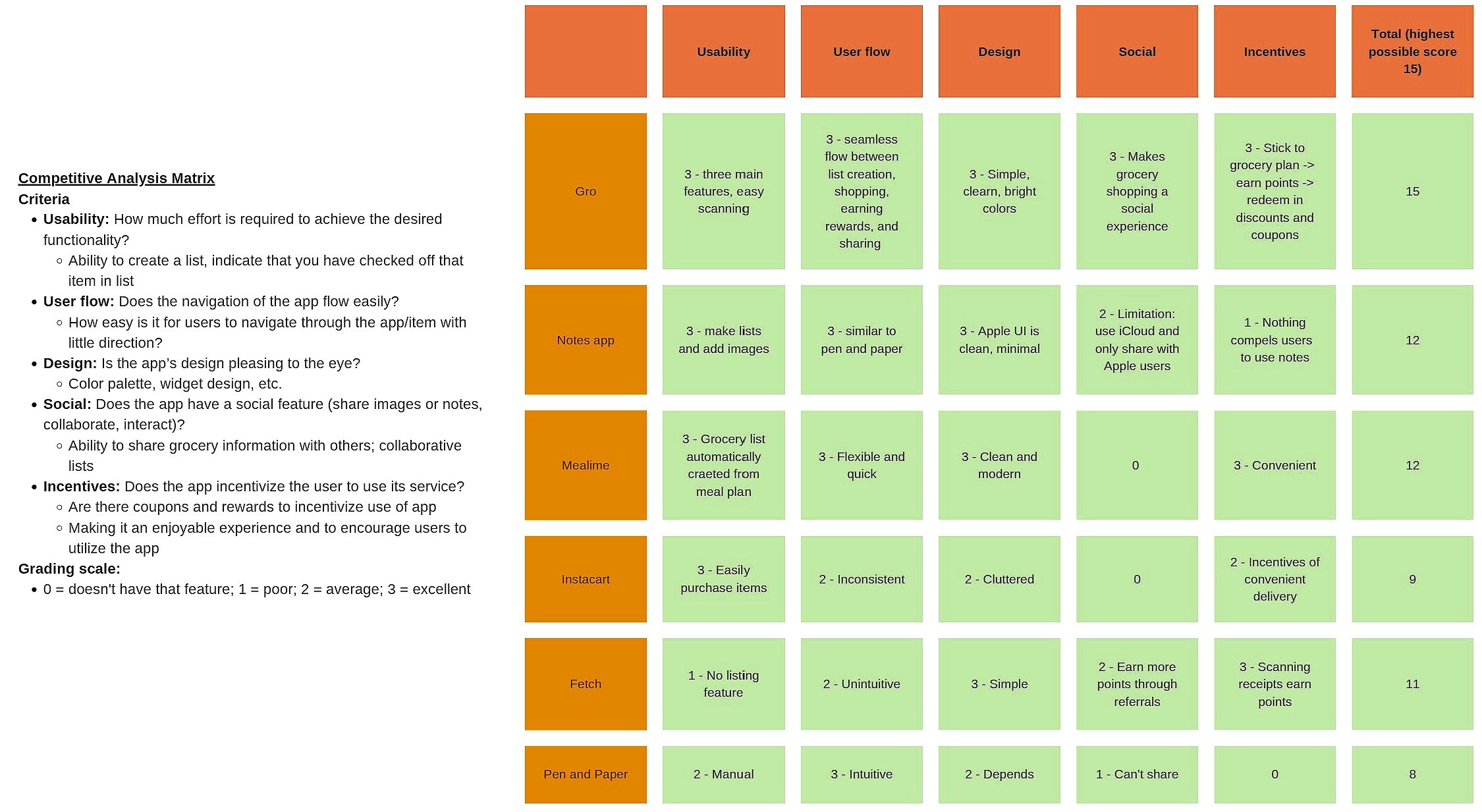
We compared Gro against iOS Notes, Mealime, Instacart, Fetch, and pen-and-paper lists. Our evaluation criteria included usability, user flow, design, social features, and incentives. We identified two clear gaps:
A lack of social accountability
A lack of rewards or incentives tied to sustainable habits
These became the differentiators of Gro.
Storyboarding
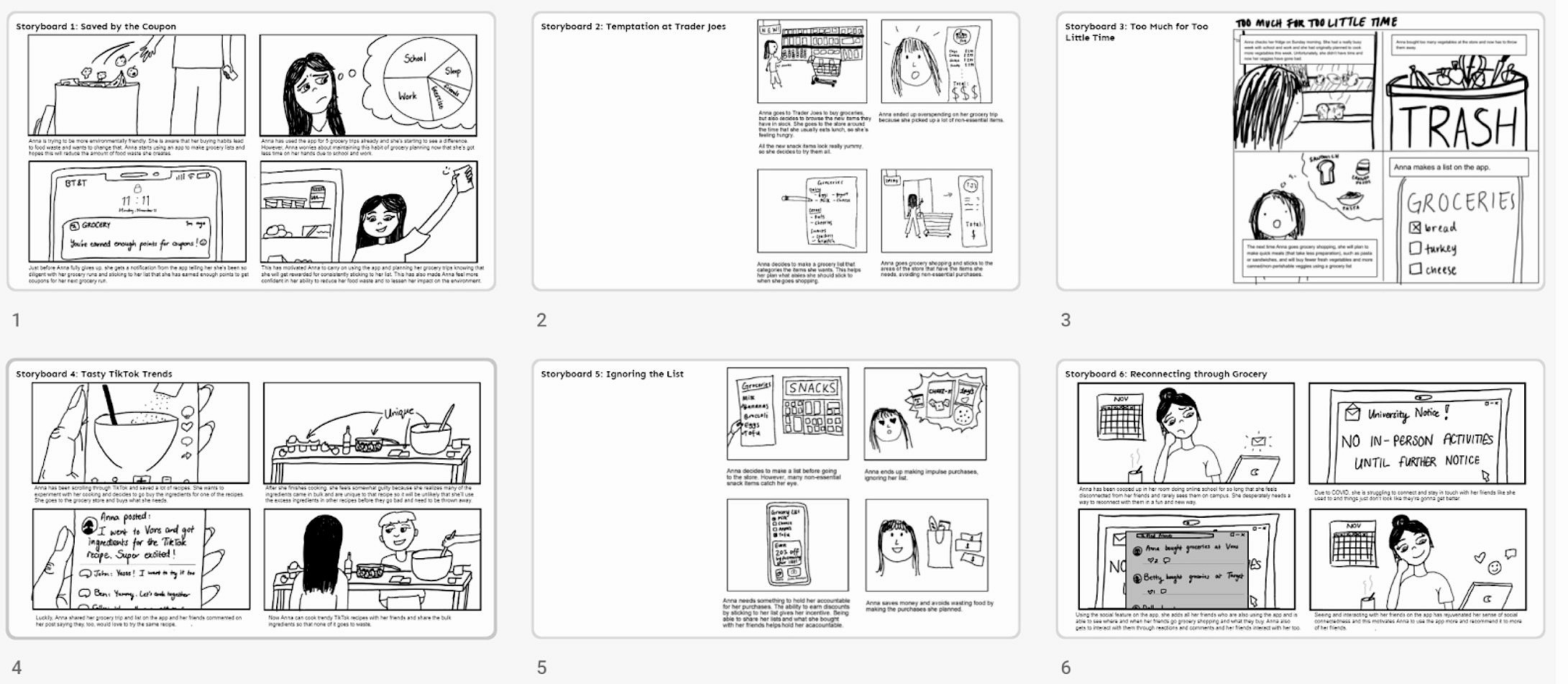
Using our personas, we visualized real-world scenarios like impulse buying, budget challenges, sharing with friends, and earning rewards to understand how Gro could support users at key decision points.
Sketches and wireframes
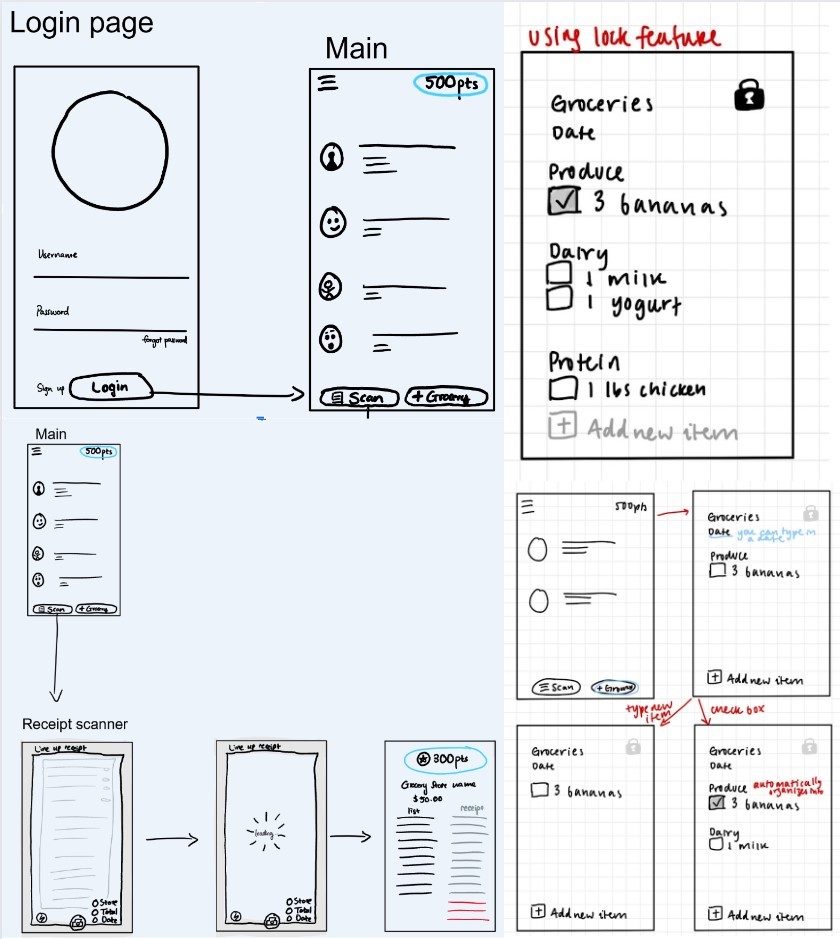
With a clear direction, we moved into sketching and wireframing, focusing on the app’s three core features. This stage allowed us to explore layout, user flow, and overall structure before moving into digital prototyping.
Low-fidelity prototyping and user testing
Once aligned on the wireframes, we brought the designs into Figma to build a low-fidelity prototype. This allowed us to test the core flows early, validate assumptions, and gather feedback before investing in higher-fidelity design.
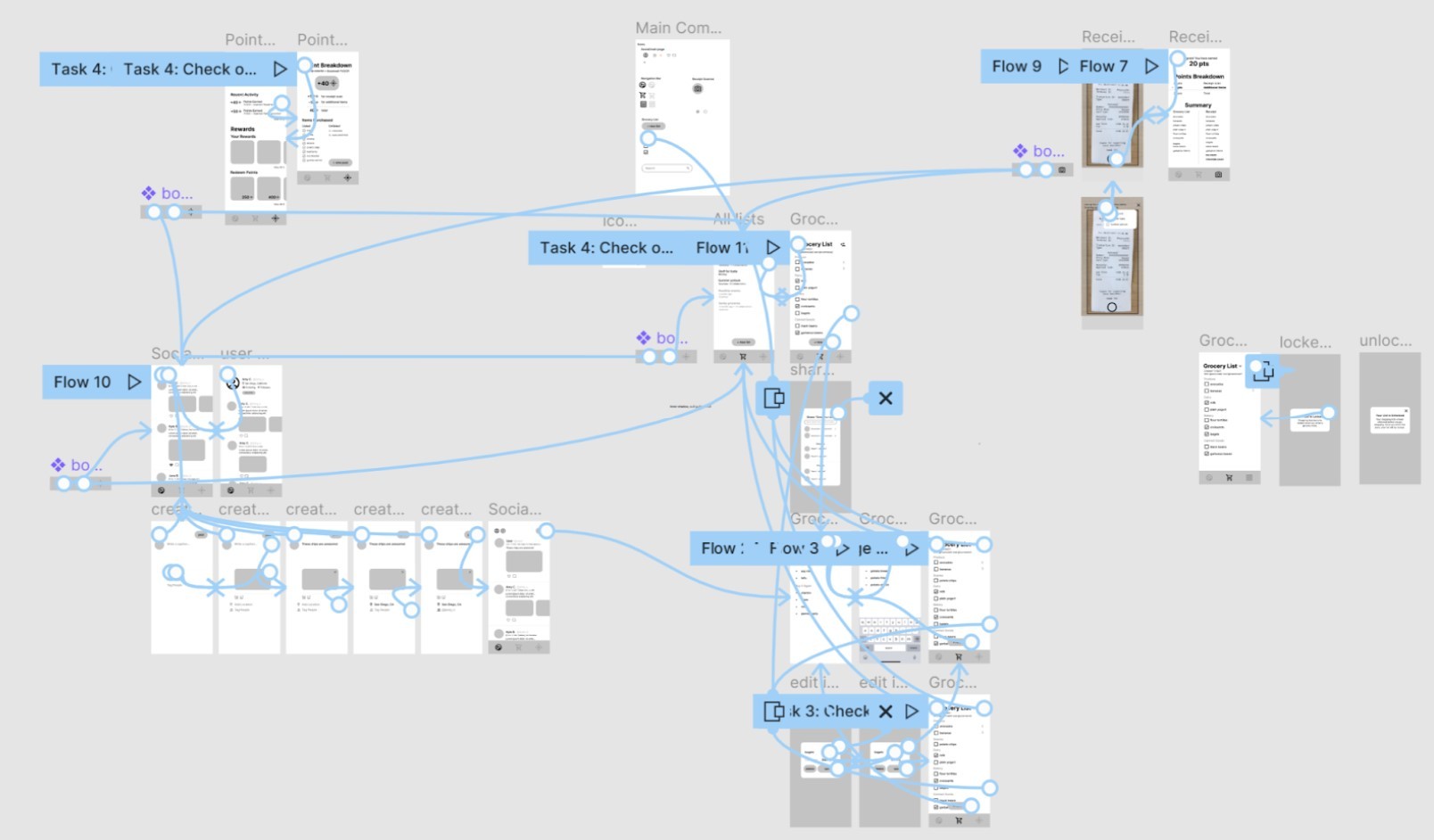
We tested the low-fidelity prototype and refined the design based on user feedback. Most changes focused on improving clarity. Users responded positively to the core features and found the concept both useful and distinctive.
Style guide and mood board
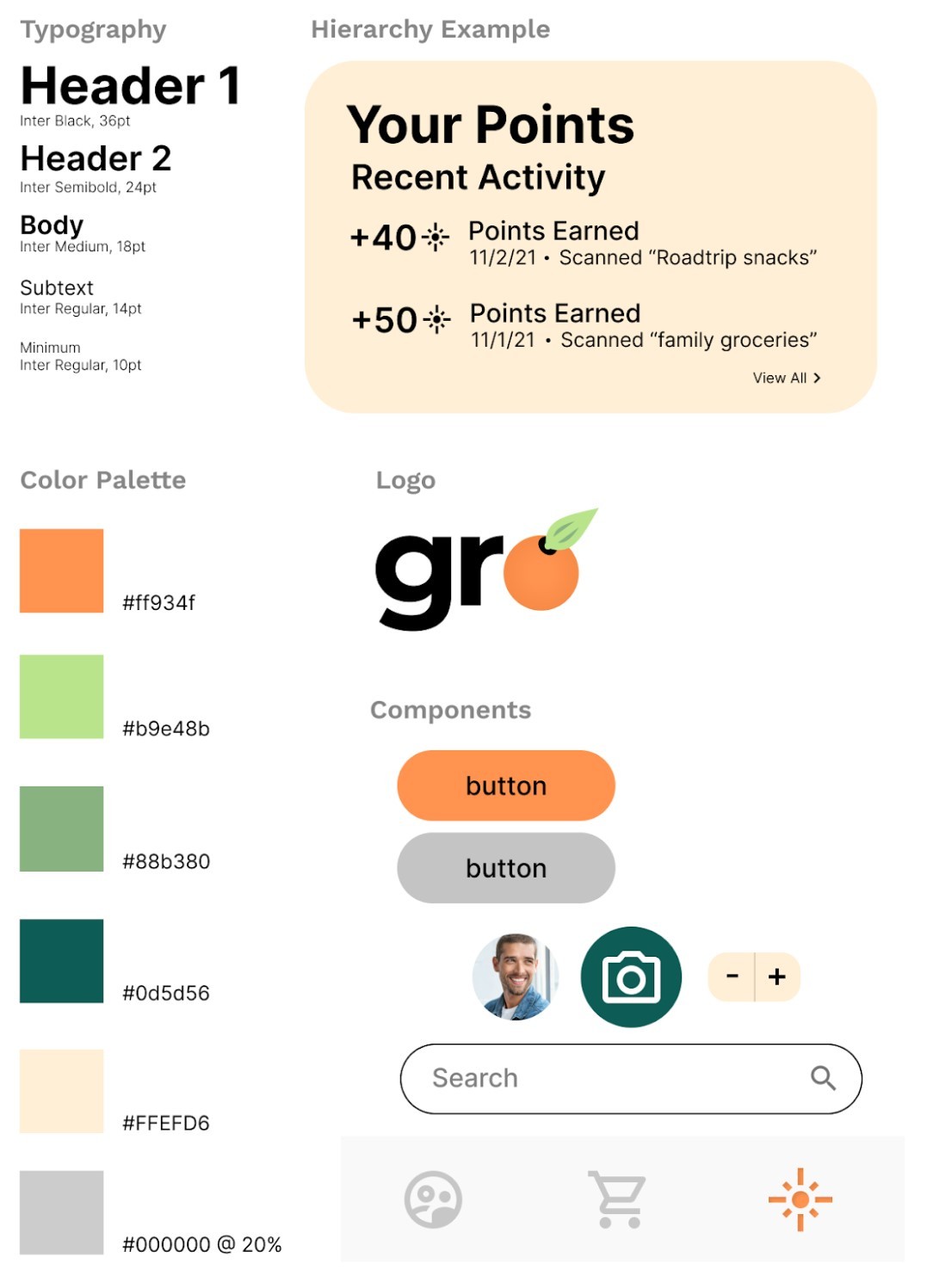
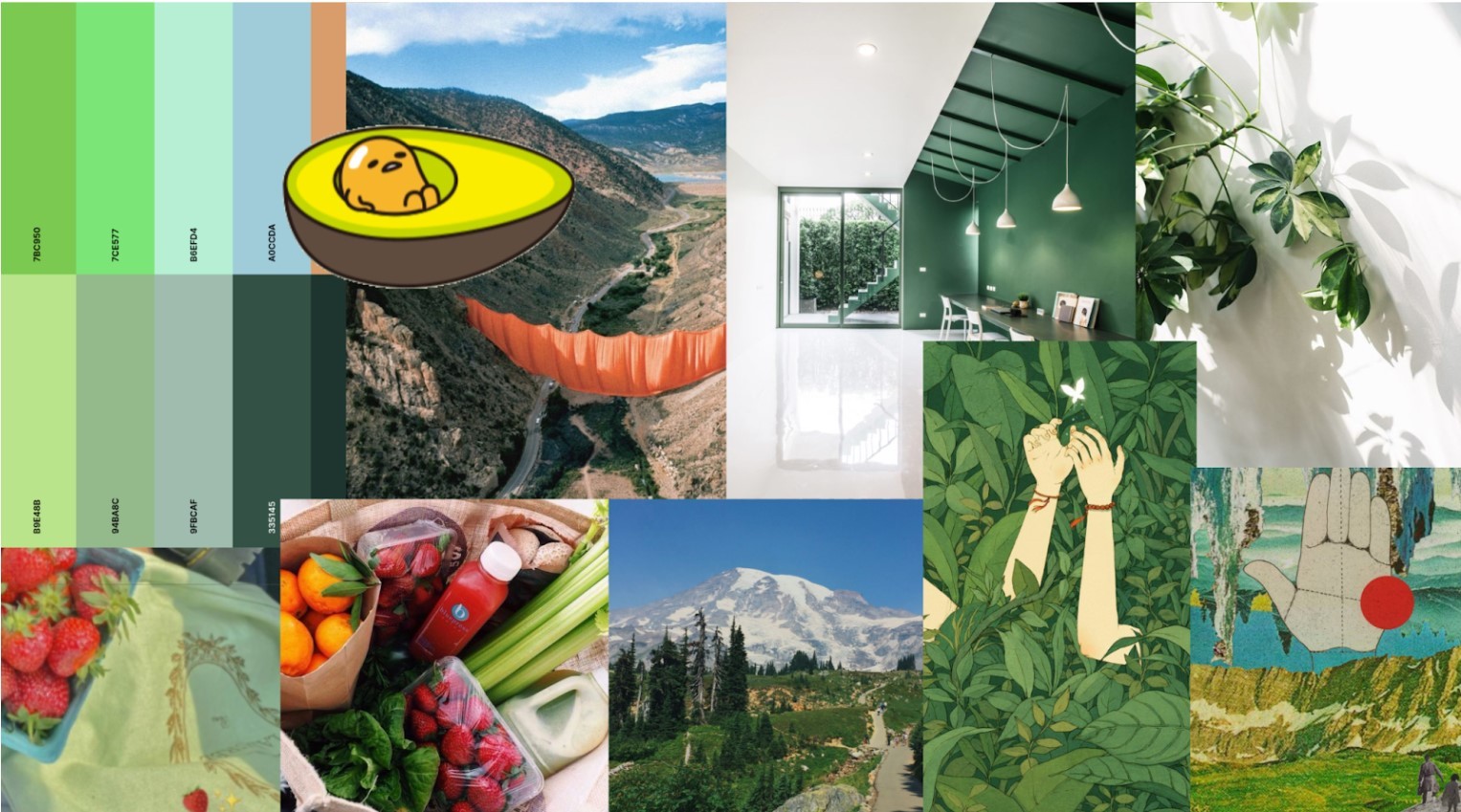
Before committing to a high-fidelity design, we defined the visual direction for Gro. We aligned on a modern, energetic aesthetic inspired by nature, guiding our choices in color, typography, and overall mood.
Bringing the solution to life
High-fidelity prototyping and user testing
We created a clickable high-fidelity prototype in Figma, bringing Gro’s visual direction and core features to life.
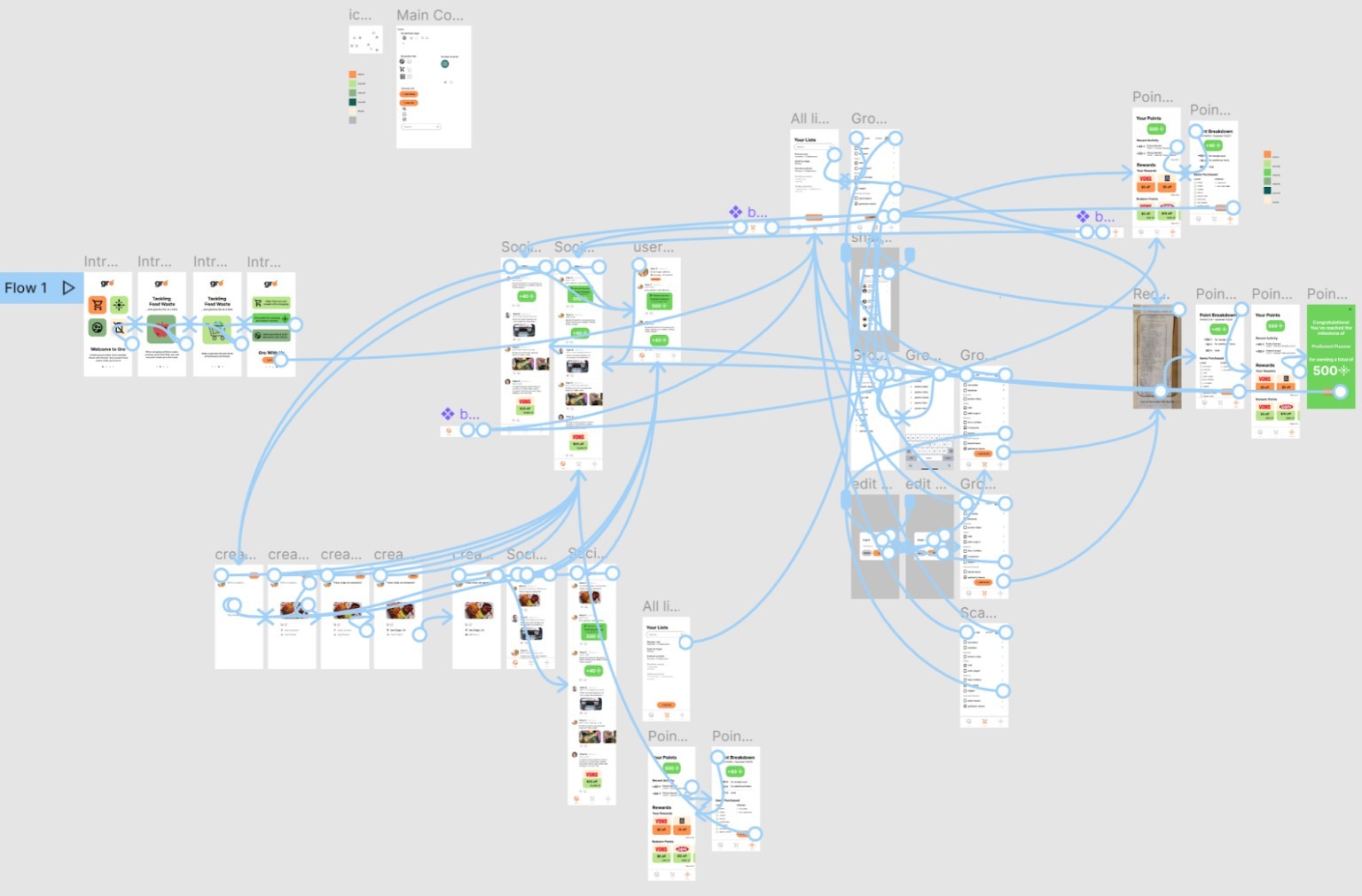
Two key improvements emerged from user-testing insights:
Lack of clarity about app's purpose
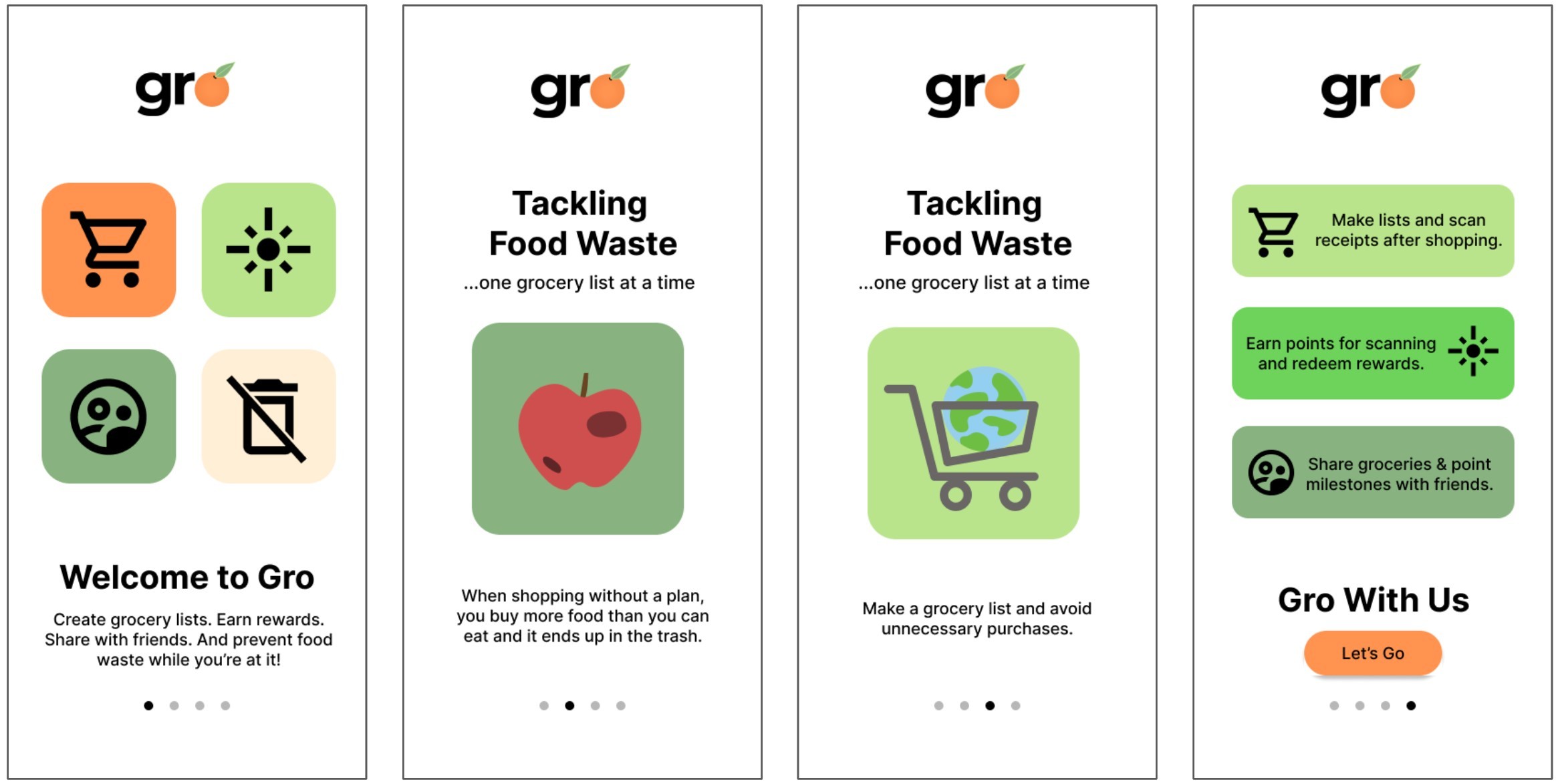
→ We added onboarding screens to clearly explain Gro’s value and its connection to reducing food waste.Difficulty editing item quantities
→ We surfaced quantity controls directly next to each item for easier interaction.
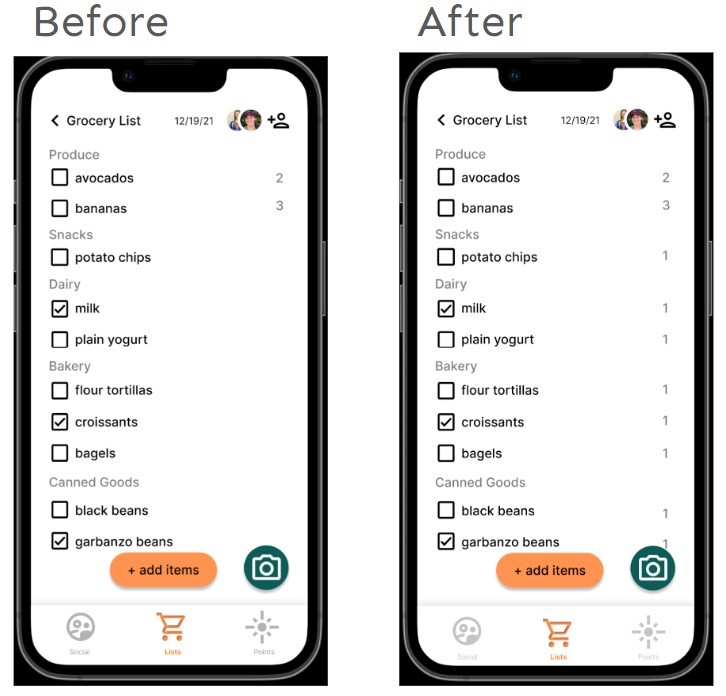
These changes significantly improved flow clarity and task completion.
Final product
Onboarding screens
Sets expectations and frames Gro as a tool to reduce waste and save money.
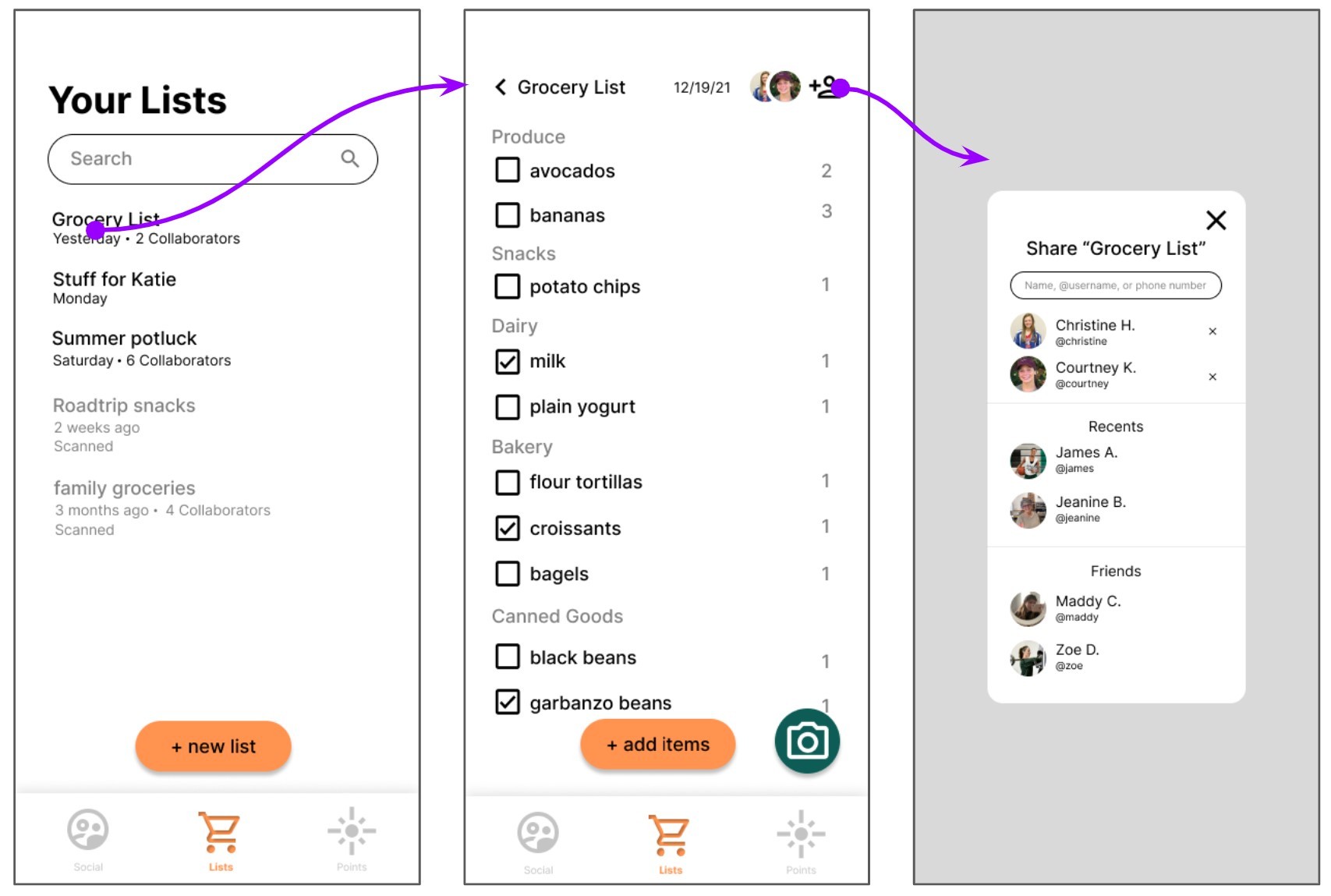
Grocery lists
Simple, intuitive lists that compare planned vs. purchased items. Incentivizing sticking to the plan with points.
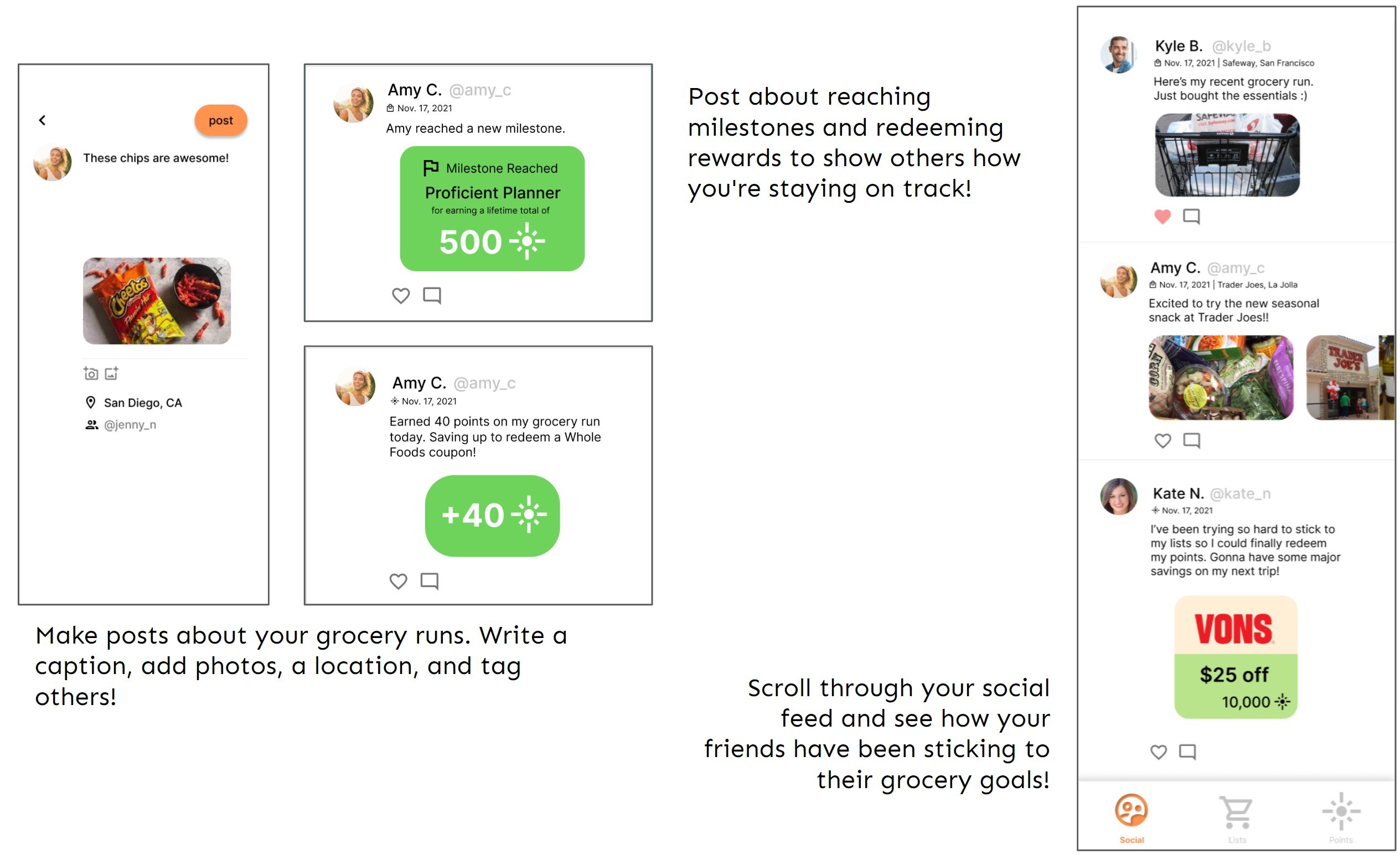
Social and points
A feed for sharing grocery trips and milestones.
Contributions and outcomes
My contributions
Led user research, including surveys and interviews.
Synthesizing insights into personas and opportunity areas.
Conducted competitive analysis to identify gaps in incentives and social features.
Sketched core flows and created wireframes for key features.
Designed the high-fidelity prototype and visual system in Figma.
Facilitated usability testing and implemented major improvements (onboarding, quantity editing).
Key outcomes
70% of testers said they would use Gro to support their grocery planning
Users found the rewards system and social feed highly motivating.
Onboarding screens improved understanding of the app’s purpose.
Revised quantity editing increased task clarity and reduced user friction.
Impact
Overall, the project demonstrated how intentional planning, built-in incentives, and social accountability can meaningfully reduce household food waste.
Reflection
Conclusion
The Gro app demonstrated a simple but powerful idea: helping users plan intentionally can meaningfully reduce household food waste. Through research, design, and testing, we created a concept that users found intuitive, motivating, and relevant to real grocery habits. Our goal was to empower people to make sustainable choices that save time, money, and resources, and Gro showed that these benefits can coexist in a single, thoughtful experience.
Key achievements and takeaways
This project strengthened my skills in:
User research
Design strategy
Collaborative problem-solving
Systems thinking
Working fully remote during COVID taught our team to communicate effectively, iterate quickly, and trust one another’s expertise.
More importantly, Gro reinforced my interest in designing for systems, not just screens, and how small nudges can drive sustainable behavior change.
Thank you to Genevieve and Lisa for being incredible teammates throughout this project 🍊.