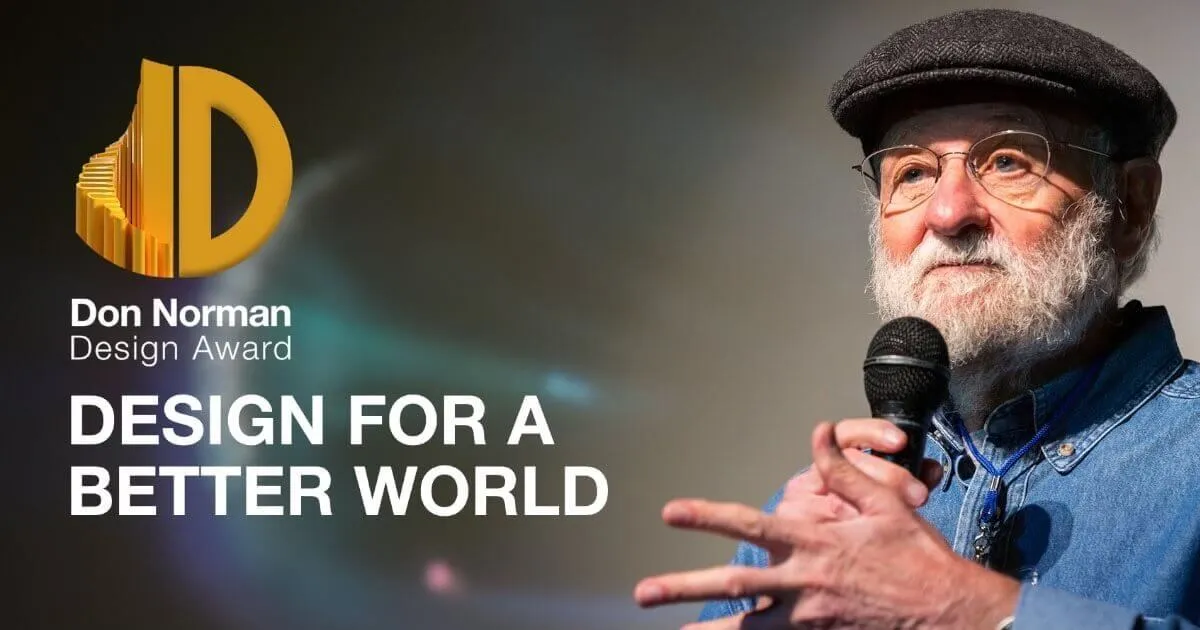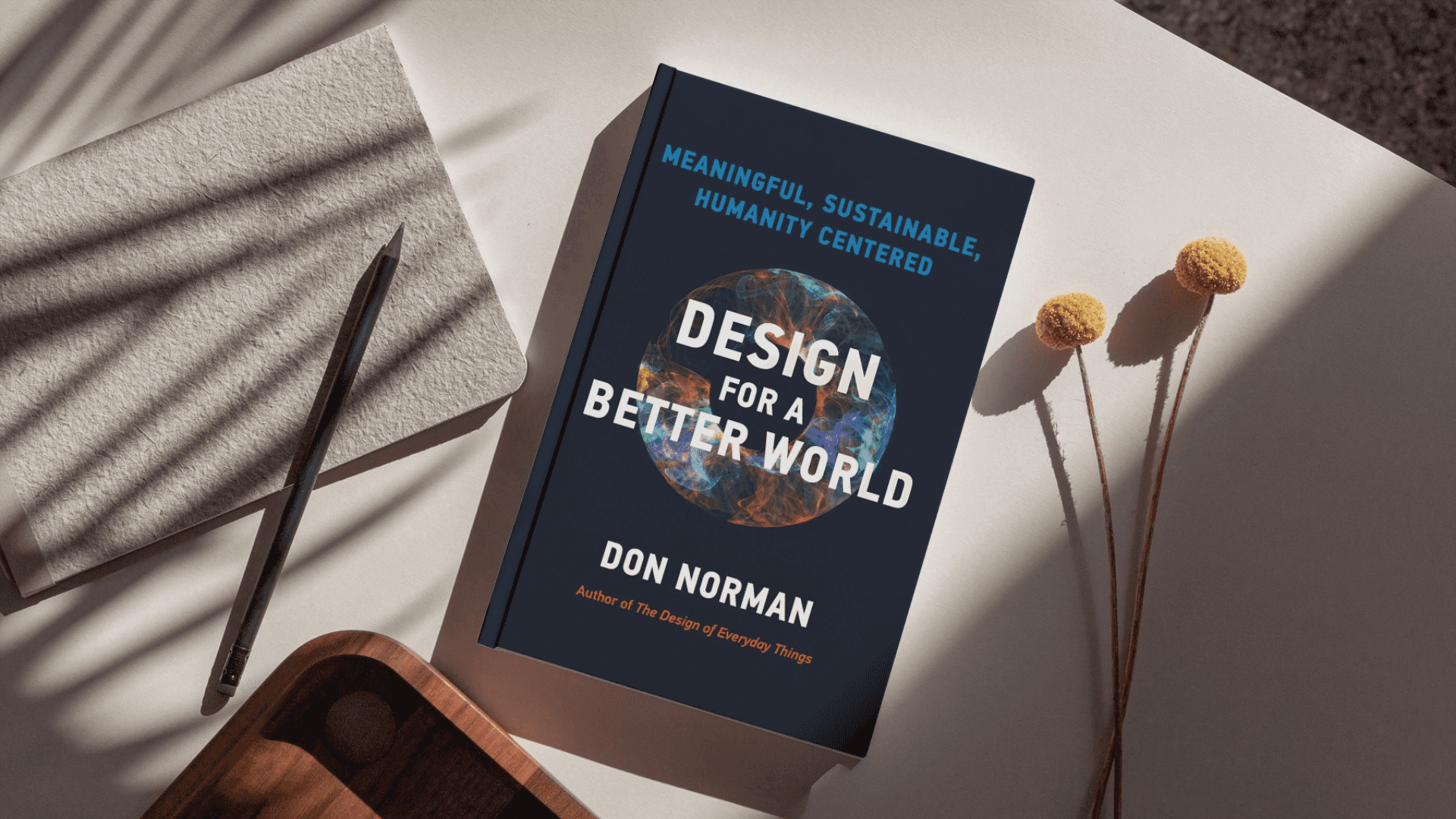
Design for a Better World by Don Norman
skill
Research & Web Design
focus
Social Impact
Role
Researcher
Year
2022

"Humanity-centered design builds on the principles of human-centered design, except it expands them. We must think about all living things and about the environment. We must realize we are part of a complex system, so what we do here can impact people all across the world and have a long effect." -Don Norman
Overview
Design for a Better World (DBW) is both a manifesto and a methodology. A framework for addressing global issues such as sustainability, equity, and resilience through humanity-centered design.
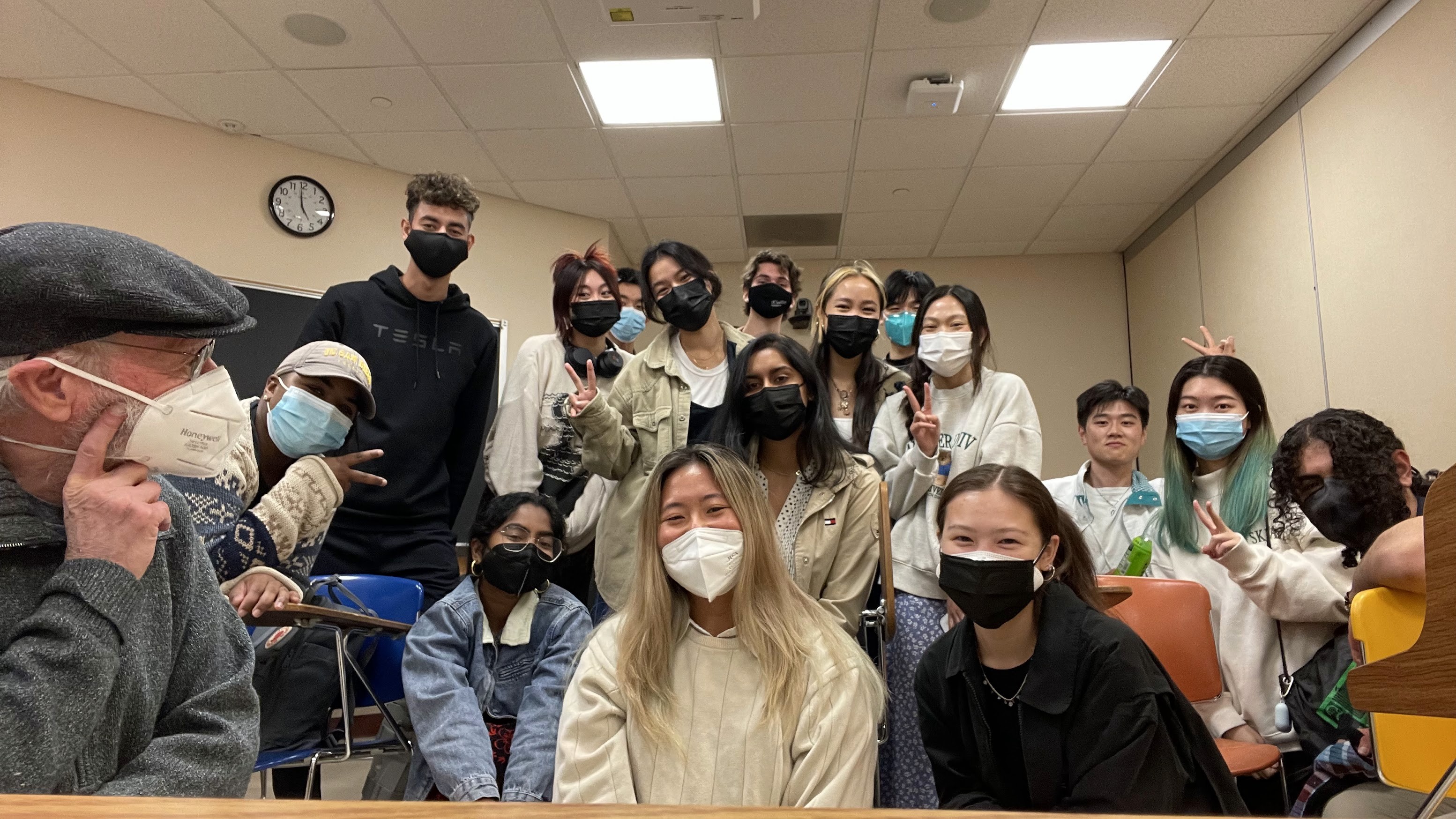
My work on DBW took place over two consecutive design projects led by Don Norman at UC San Diego. I was part of a small group of students that collaborated directly with him to critique early drafts of the book and to create the companion website, DBW.jnd.org.
Across both quarters, I contributed to research, systems mapping, conceptual development, and the design of the digital experience—a collaboration acknowledged in the published book.
Update: DBW.jnd.org was taken down in 2025. All the material within that website can be found at https://jnd.org/category/essays/dbw.
The Challenge
How can a book about redesigning global systems become more than a text?
How can we help readers act on principles like sustainability, equity, and community resilience?
This meant moving beyond designing things to designing systems of interactions, policies, and cultural change.
Our challenge was to transform DBW’s ideas into:
Actionable frameworks
Educational tools
Real-world examples
A digital resource that connects people, organizations, and ideas
We needed to move readers from understanding → action.
The Process
Phase 1: Research, Critique & Manuscript Development
In the first phase of the project, we worked directly with early chapters of the book:
Debating and refining the early manuscript's chapters
Identifying gaps or contradictions
Synthesizing research into structured insights
Producing analytical reports that informed later versions
Don Norman’s teaching style was participatory, and our critiques influenced the book's evolving content.
I contributed heavily to Part VI: Actions, exploring:
Community-led models
Collective mobilization
Designing beyond Western assumptions
How to create action pathways without causing harm or exclusion
Our team’s findings later became the conceptual backbone of the website’s “Take Action” section.
Phase 2: Designing the DBW Companion Website
A smaller group continued into a second-quarter project focused entirely on designing the companion website.
Expanding the Research
I helped map:
Organizations aligned with the book’s values
Case studies demonstrating humanity-centered design
Tools, frameworks, and external resources
Multi-scalar examples of systems change
Information Architecture & UX
I was involved in:
Designing nonlinear learning flows
Structuring the resource library
Creating card-based navigation
Mapping how users move from reading → action
Prototyping
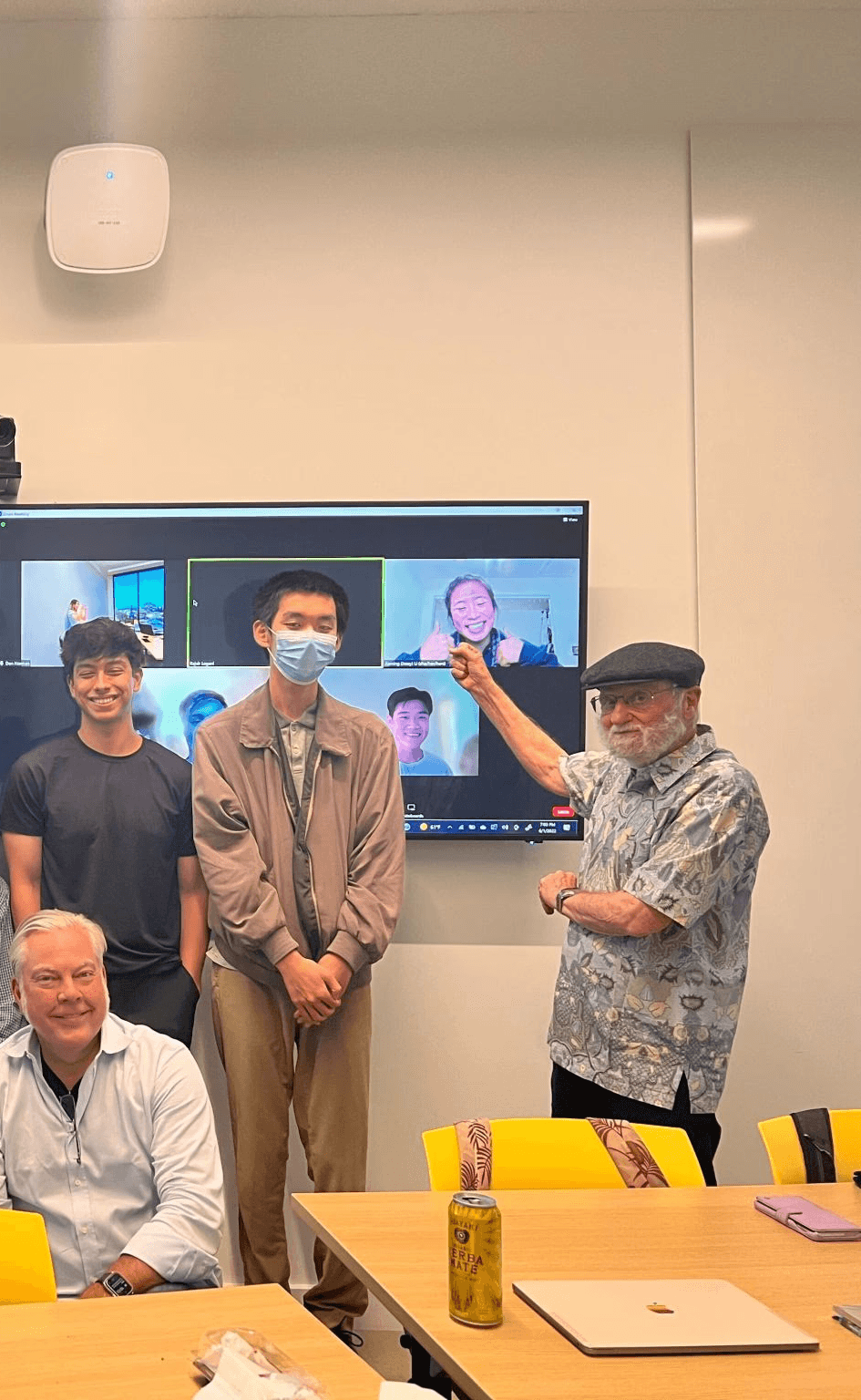
We built a full Figma prototype that was later handed off to Don Norman’s long-time web team, Southampton, England-based UX Consultancy Ltd., who developed the live site.
OUTCOME
The website launched in 2023 as DBW.jnd.org, accompanying the global release of Design for a Better World.
The resources helped:
Thousands of readers explore DBW concepts
Connect with global organizations working on sustainability and community-driven design
Understand how abstract systems principles translate to real-world action
Offer educators and practitioners structured learning tools
For me, the experience solidified my passion for humanity-centered design at scale, bridging research, systems thinking, and product design for meaningful societal change.
Contributions
I contributed in three core ways:
Research & Concept Development
Co-authored analytical frameworks for the book’s “Actions” section
Synthesized research into actionable insights
Mapped organizations, case studies, and global resources
UX & Interaction Design
Designed IA, user flows, and content architecture
Created interaction patterns for exploring complex topics
Developed modules for the website’s resource library and learning pathways
Prototyping
Co-designed the full Figma prototype used by the professional development team
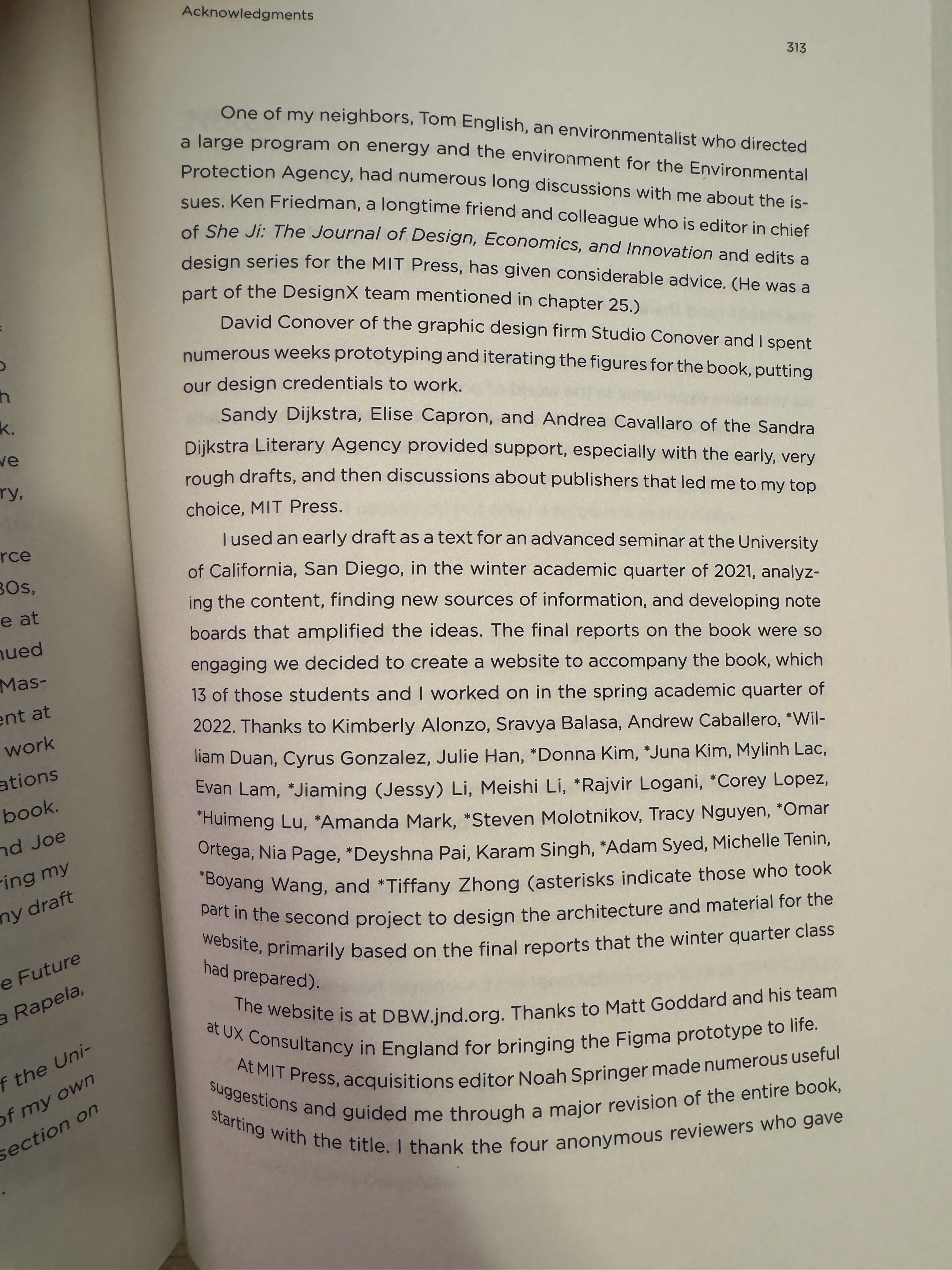
REFLECTION
Key takeaways
How to synthesize complex theory into accessible digital experiences.
How to design for pluriversal audiences and not just one worldview.
How to create action-oriented tools for social, ecological, and behavioral transformation.
And most importantly, that design becomes powerful when it enables people to participate in shaping better futures.
Reflection
Working with Don Norman on DBW was one of the defining academic experiences of my life. I helped challenge the book, expand it, and build part of its companion ecosystem.
It fundamentally shaped my commitment to designing systems, technologies, and products that care for people and the planet. Through this class, I realized that design can make a difference beyond just tech and screens. Design is impact.
Thank you to Don Norman and Prof. Michael Meyer for trusting us with this work and for modeling what humanity-centered design looks like in practice.
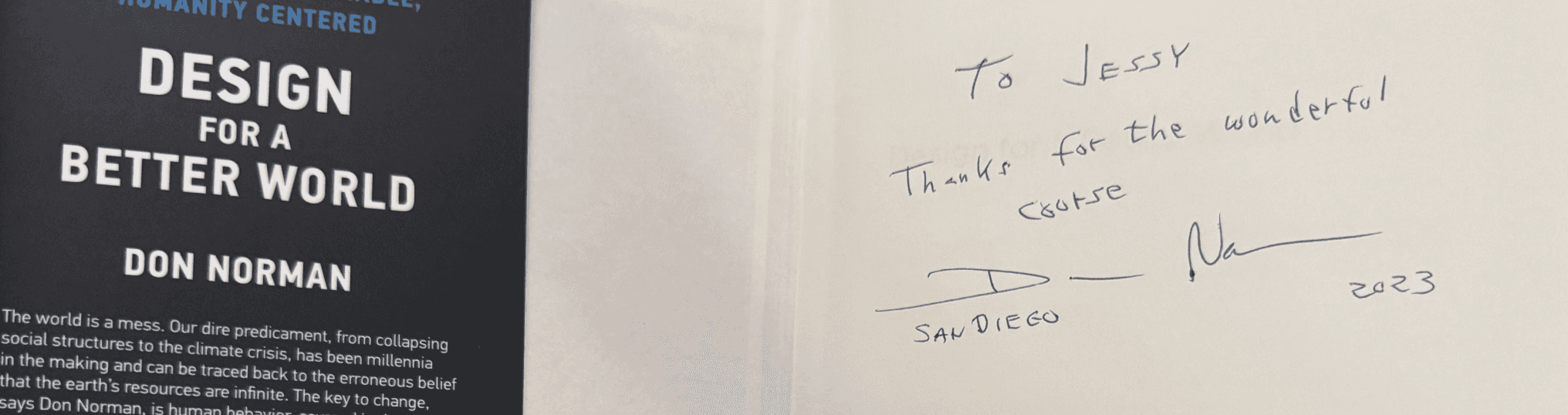
Even with his demanding schedule, Don Norman has continued to mentor, guide, and encourage me over the years. I’m deeply thankful for his ongoing mentorship and friendship.

WANT TO EXPLORE MORE?
The Don Norman Design Award (DNDA) charity is a direct result of the book and the project. Visit https://dnda.design for more.